
2026 Harley-Davidson® Road Glide® near Greenville, SC
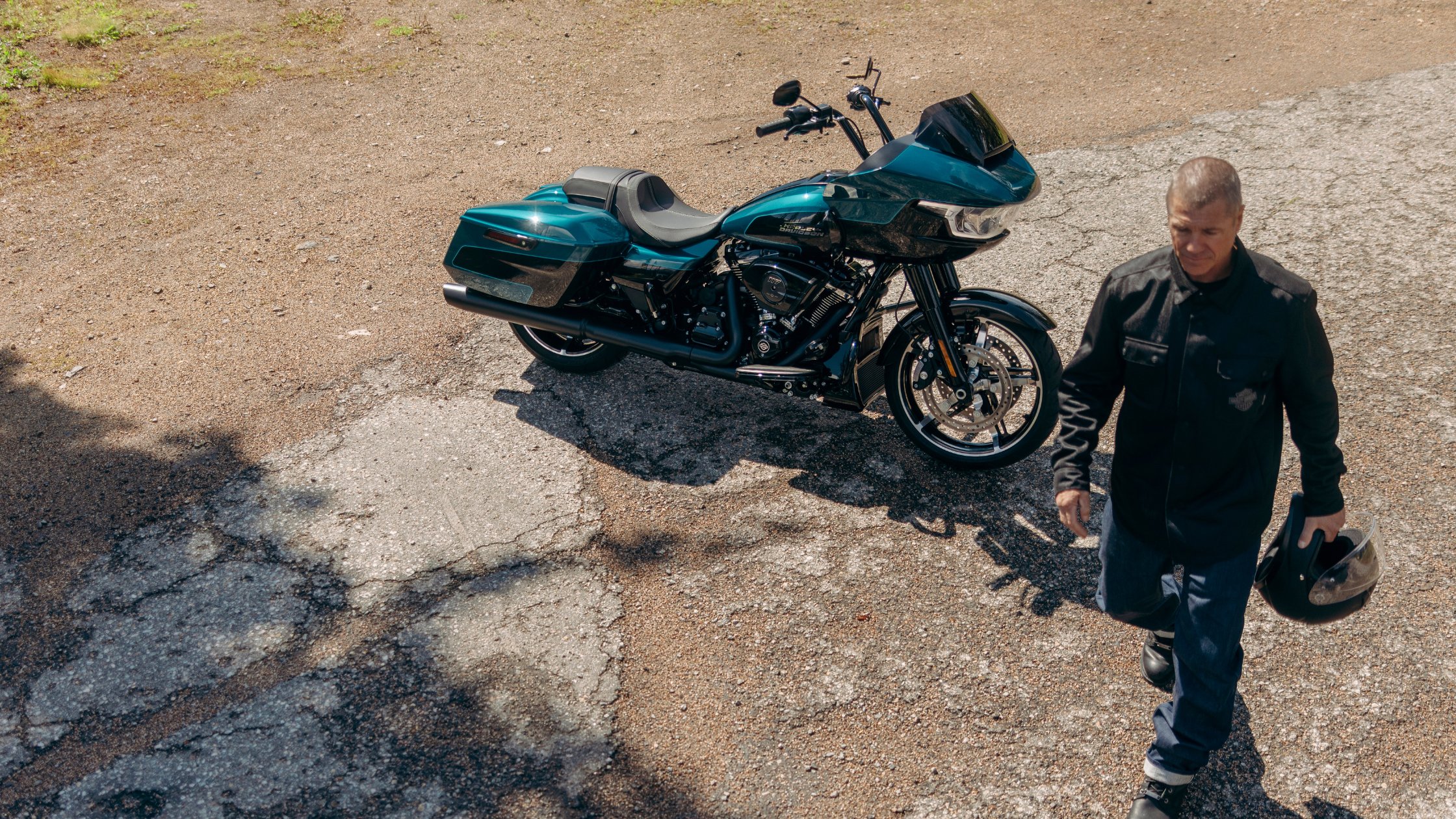
The Harley-Davidson® Road Glide® has maintained a distinct engineering identity since its introduction in 1998, separating itself from other touring motorcycles through its structural layout, aerodynamic strategy, and long-distance performance priorities. From its earliest generation, the Road Glide® was developed around a frame-mounted fairing concept, a configuration intended to improve directional stability and reduce steering influence at sustained highway speeds. Over time, the model has evolved through measured mechanical updates rather than abrupt redesigns, allowing each generation to refine performance, rider interface, and electronic integration.
Using the 2025 Harley-Davidson® Road Glide® as a technical reference point, the platform demonstrates how incremental engineering improvements have shaped the modern touring configuration. The current specification reflects a balance between power output, aerodynamic efficiency, and integrated rider assistance systems. These elements also establish a clear baseline for the anticipated 2026 Harley-Davidson® Road Glide®, which is expected to build directly upon this architecture rather than replace it.
Milwaukee-Eight® 117 Powertrain Configuration
The 2025 Harley-Davidson® Road Glide® is equipped with the Milwaukee-Eight® 117 V-Twin engine, a displacement-focused powertrain designed to deliver consistent torque across a wide operating range. The engine produces 105 horsepower and 130 foot-pounds of torque, figures that emphasize sustained pulling power rather than peak engine speed. This output profile supports steady acceleration during highway merging, two-up touring, and loaded riding conditions.
Liquid-cooled cylinder heads are integrated into the engine design to regulate operating temperatures more effectively than air-only cooling systems. This configuration reduces thermal variation during prolonged operation, especially in high ambient temperatures or congested traffic conditions. By maintaining more consistent combustion temperatures, the engine sustains performance output while also improving rider comfort.
Fuel efficiency is rated at 44 miles per gallon under standard conditions. This efficiency supports extended riding intervals between refueling stops, which remains a critical factor for long-distance touring motorcycles. Throttle response is electronically managed and synchronized with ride mode selection, allowing output characteristics to adapt to varying traction and surface conditions without mechanical adjustment.
Frame-Mounted Sharknose Fairing and Aerodynamics
A defining engineering feature of the 2025 Harley-Davidson® Road Glide® is its Sharknose fairing, which is mounted directly to the motorcycle frame rather than the front forks. This design choice isolates aerodynamic forces from steering input, reducing the effect of crosswinds and turbulence on handlebar movement. The result is increased directional stability at highway speeds and reduced rider input correction during long-distance travel.
For the 2025 Harley-Davidson® Road Glide®, the fairing geometry has been refined using computational fluid dynamics modeling. This process allows airflow patterns to be analyzed and adjusted digitally before physical production. The resulting shape reduces helmet buffeting by managing pressure zones around the rider’s upper body and head. Integrated air channels and venting assist in directing airflow away from critical contact points, contributing to reduced fatigue during extended rides.
The windshield and air vanes work in conjunction with the fairing to manage airflow distribution. These components are not decorative elements. Each surface is designed to redirect air with specific velocity and pressure characteristics, maintaining consistency across a range of speeds.
Chassis Design and Weight Distribution
The 2025 Harley-Davidson® Road Glide® chassis is engineered to support both high-speed stability and controlled low-speed maneuvering. Compared to previous generations, the 2025 Harley-Davidson® Road Glide® benefits from reduced overall weight, which improves responsiveness during parking-lot operation and tight turning scenarios without compromising highway composure.
Wheel sizing consists of a 19-inch front wheel and an 18-inch rear wheel, both constructed from cast aluminum. This staggered configuration supports predictable steering behavior while maintaining a stable rear contact patch for torque transfer. The wheels are designed to balance rotational mass and strength, contributing to smooth tracking across uneven pavement.
Rear suspension is handled by asymmetric emulsion shocks that allow rapid preload adjustment. This system enables riders to compensate for passenger weight or cargo load without complex setup procedures. Suspension tuning prioritizes consistent damping response rather than aggressive stiffness, aligning with the touring-focused application of the 2025 Harley-Davidson® Road Glide®.
Ergonomic Geometry and Rider Positioning
Rider ergonomics on the 2025 Harley-Davidson® Road Glide® are designed around adjustability and long-duration comfort. The one-piece seat is engineered to distribute rider weight evenly while maintaining a low laden seat height of 26.6 inches. This dimension improves rider confidence during stops and slow-speed operation, particularly when the motorcycle is fully loaded.
Handlebars offer 27 degrees of adjustability, allowing fine control over reach and wrist angle. This adjustment range supports a wide variety of rider statures and riding preferences. Proper handlebar alignment reduces upper-body strain during extended rides and contributes to more precise steering input.
Foot positioning and control placement are configured to maintain a neutral riding posture. These elements are integrated into the overall geometry rather than treated as isolated comfort features, ensuring consistency between seating position, handlebar reach, and chassis balance.
Digital Display and Control Interface
The primary rider interface is a 12.3-inch full-color TFT touchscreen display mounted within the fairing. This display functions as the central control hub for navigation, infotainment, ride data, and system settings. Screen resolution and brightness are calibrated for visibility in varying lighting conditions, including direct sunlight.
Powered by Skyline™ OS, the interface emphasizes clarity and minimal visual clutter. Navigation information, vehicle status, and media controls are presented in a structured layout that reduces the need for prolonged visual attention. Touch responsiveness is tuned for use with riding gloves, maintaining usability without compromising safety.
Bluetooth® connectivity enables integration with compatible devices, supporting communication and audio playback. Embedded navigation functionality eliminates reliance on external mounting solutions, preserving the integrity of the cockpit layout.
Audio System and Infotainment Integration
In-fairing speakers are integrated into the 2025 Harley-Davidson® Road Glide® design to provide consistent audio output across a wide speed range. Speaker placement and tuning focus on maintaining clarity rather than excessive volume. Audio controls are accessed through the touchscreen display, allowing adjustments without additional hardware interfaces.
The infotainment system is designed to operate seamlessly alongside navigation and ride data. This integration ensures that media playback does not interfere with access to critical vehicle information. The system architecture prioritizes stability and ease of use rather than excessive customization.
Ride Modes and Electronic Adaptability
The 2025 Harley-Davidson® Road Glide® includes three pre-programmed ride modes that adjust throttle response, traction control parameters, and braking behavior. Each mode is calibrated to suit different riding environments, including varying road surfaces and weather conditions.
A customizable ride mode allows riders to tailor performance characteristics to individual preferences. Adjustments are made electronically and stored within the system, eliminating the need for mechanical changes. This adaptability ensures consistent performance behavior across repeated rides.
Electronic management systems operate continuously in the background, making incremental adjustments to maintain stability and traction without intrusive intervention.
Rider Safety Enhancements and Stability Systems
The 2025 Harley-Davidson® Road Glide® incorporates a comprehensive suite of rider safety enhancements designed to support control during acceleration, braking, and deceleration. Anti-lock Braking System functionality prevents wheel lock during hard braking events, maintaining directional stability.
Electronic Linked Braking distributes braking force between front and rear wheels to improve stopping efficiency. Traction Control System functionality manages rear-wheel slip during acceleration, while Drag-Torque Slip Control System operation reduces the risk of rear-wheel instability during abrupt downshifts.
Cornering-enhanced systems adjust braking and traction behavior based on lean angle. These systems include cornering-enhanced ABS, electronic linked braking, traction control, and drag-torque management. Vehicle Hold Control assists during hill starts by maintaining brake pressure until throttle input is applied. Tire Pressure Monitoring System functionality provides continuous feedback through the display, supporting proper tire maintenance.
Touring Efficiency and Operational Consistency
The 2025 Harley-Davidson® Road Glide® platform is optimized for long-distance operation without sacrificing control in low-speed conditions. Aerodynamic efficiency, engine thermal management, and electronic adaptability work together to maintain consistent performance over extended durations. The integration of these systems reflects a design approach focused on functional efficiency rather than isolated feature development.
Every component, from the fairing structure to the suspension calibration, contributes to predictable handling behavior. This consistency forms the technical foundation that continues to define the 2025 Harley-Davidson® Road Glide® lineage as it approaches the next model year.