
2026 Harley-Davidson® Road Glide® Limited near Greenville, SC
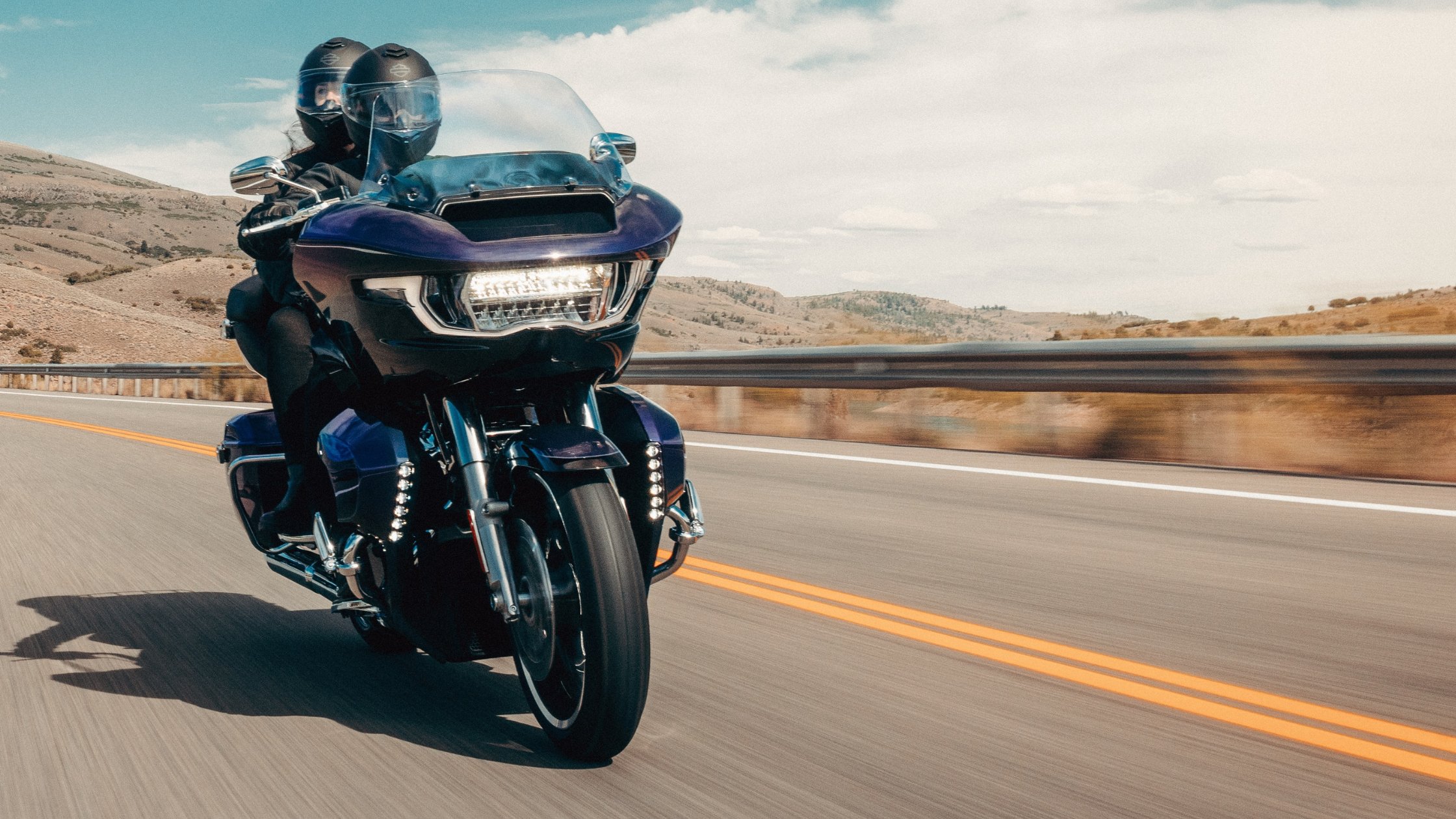
The 2026 Harley-Davidson® Road Glide® Limited is engineered as a full-scale touring motorcycle designed around long-distance efficiency, mechanical stability, and integrated rider technology. Its structure combines a large-displacement V-twin engine, a reinforced touring chassis, and advanced electronic rider-assist systems intended to support controlled performance across extended rides. The model uses a fixed shark-nose fairing layout paired with a high-capacity fuel system and substantial luggage volume, creating a platform focused on sustained highway operation and predictable handling. The combination of mechanical durability and embedded digital systems defines the motorcycle’s technical identity. Every component, from drivetrain ratios to suspension tuning, reflects specifications aimed at stable performance under varying road loads and rider conditions.
Engine Architecture and Performance Characteristics
The engine fitted to this model is the Milwaukee-Eight® VVT 117, displacing 117 cubic inches or 1,923 cubic centimeters. It uses a pushrod-operated overhead valve system with four valves per cylinder and hydraulic self-adjusting lifters. This valve arrangement reduces service complexity while maintaining valve accuracy during extended operation. The bore measures 4.075 inches, and the stroke extends to 4.5 inches, producing a configuration that favors strong low-end torque delivery.
The compression ratio is rated at 10.3:1, balancing combustion efficiency with practical fuel requirements. Electronic Sequential Port Fuel Injection controls fuel delivery to maintain consistent throttle response. The lubrication system uses a pressurized dry-sump design, improving oil circulation and thermal management during prolonged riding sessions. Engine output reaches approximately 131 foot-pounds of torque at 3,250 rpm and a peak power rating of 106 horsepower at 4,600 rpm. This output range supports gradual acceleration and stable cruising without excessive engine speed. The 2-1-2 dual exhaust system with tapered mufflers manages flow while maintaining balanced exhaust pressure. A fiberglass washable air cleaner contributes to long-term intake efficiency.
Transmission and Drivetrain Engineering
Power transfer occurs through a mechanically actuated 10-plate wet clutch that includes Assist and Slip functionality. This design reduces clutch lever effort while limiting rear wheel lock tendencies during aggressive downshifts. The primary drive uses a chain configuration with a 34/46 ratio, while the final drive is achieved through a belt system at a 32/68 ratio. Belt final drive selection reduces maintenance requirements compared with chain-based alternatives and supports smooth torque delivery.
The 2026 Harley-Davidson® Road Glide® Limited uses a 6-speed Cruise Drive® transmission designed for predictable ratio progression. First gear is configured with a higher overall ratio to support controlled launches and low-speed maneuvering. Gear progression gradually reduces engine speed across higher gears, with sixth gear optimized for sustained highway operation. This arrangement contributes to reduced vibration levels and improved fuel efficiency during long-distance riding. Transmission fluid capacity and drivetrain lubrication volumes are calibrated to maintain stable operating temperatures and support consistent mechanical performance.
Structural Design and Chassis Composition
The chassis relies on a mild steel tubular frame with a two-piece stamped and welded backbone. Cast and forged junctions reinforce high-stress areas, while twin down-tubes provide structural stability. The rear frame section bolts onto the main frame and includes forged fender supports. This construction method allows the load-bearing strength required for touring applications while maintaining service accessibility.
The swingarm uses a two-piece drawn and welded section with forged junctions. The design increases torsional rigidity to support consistent rear wheel tracking when carrying luggage and passenger loads. Geometry settings include a 26-degree steering head rake and a 29.25-degree fork angle, paired with a 6.8-inch trail measurement. These values emphasize directional stability rather than rapid steering transitions, aligning with long-distance touring requirements. The wheelbase measures 64 inches, supporting straight-line control at highway speed and reducing instability from crosswinds or surface variations.
Suspension Configuration and Ride Control
The front suspension consists of a 49 mm Dual Bending Valve fork engineered to absorb road irregularities while maintaining steering accuracy. The rear suspension uses dual adjustable emulsion shocks with remote preload adjustment on the left shock and threaded preload on the right. This system allows load compensation to preserve ride geometry when additional cargo or passenger weight is introduced.
Front suspension travel measures 4.6 inches, while rear travel extends to 3 inches. These values provide controlled vertical movement suited for highway touring and moderate surface imperfections. Suspension tuning supports predictable chassis movement without excessive pitch or rebound. Static ground clearance is measured at 5.1 inches, supporting practical cornering clearance while maintaining a manageable seat height. The overall configuration contributes to controlled ride dynamics under variable load conditions.
Dimensions, Capacity, and Touring Functionality
The 2026 Harley-Davidson® Road Glide® Limited measures 103.1 inches in total length, 40.7 inches in width, and 57 inches in overall height. Laden seat height is specified at 27.5 inches, while unladen seat height reaches about 29 inches. This positioning allows riders to maintain stable footing at stops while preserving ergonomic reach to handlebars and controls.
Fuel capacity reaches 6 gallons, supporting extended travel distances. Oil capacity is rated at 5 quarts with the filter installed, and coolant capacity is measured at 0.82 quarts. The running order weight is approximately 919 pounds, reflecting the integrated touring equipment and structural design. Luggage capacity totals 5.05 cubic feet, supporting storage requirements for multi-day travel. Tire specifications include a 130/60B19 front tire and a 180/55B18 rear tire, both from the Dunlop® Harley-Davidson® Series. The tire configuration balances grip, durability, and load stability.
Wheels, Braking Systems, and Handling Stability
The model uses cast aluminum wheels with a 19-inch diameter at the front and an 18-inch diameter at the rear. Wheel widths measure 3.5 inches in front and 5 inches in the rear. This configuration supports predictable turn-in while maintaining stability under touring loads. The braking system uses dual floating front rotors combined with four-piston fixed front calipers. The rear uses a fixed rotor paired with a single axially mounted caliper.
Front rotors measure 12.6 inches in diameter, while the rear rotor measures 11.8 inches. Anti-lock Braking System operation is standard, reducing wheel lock during sudden braking events. Electronic Linked Braking coordinates front and rear brake application to improve balance under heavy deceleration. Lean angles are rated at 31 degrees to both the left and right sides, indicating controlled cornering capability within touring limits.
Electrical Systems and Functional Equipment
Electrical architecture includes a sealed maintenance-free 12V battery rated at 28 amp-hours with a 405 cold-cranking amp rating. Charging is managed by a three-phase 58-amp system capable of delivering up to 754 watts at 13 volts. Starting is supported by a 1.6 kW electric starter using a solenoid shift engagement system. This configuration supports reliable starts and stable electrical supply for accessory systems.
Lighting equipment uses LED components across the motorcycle. The headlamp, tail and stop lights, front signals, rear turn signals, and integrated fog lamps all utilize LED technology for efficiency and consistent output. Digital gauges are integrated into the display system, providing essential operating information within a single viewing area. Electric power outlets include a 15-watt USB-C port located in the media storage box and an additional accessory port in the Tour-Pak® storage area.
Infotainment and Digital Integration
The infotainment system operates on Skyline™ OS and uses a 12.3-inch full-color TFT display. Screen visibility and interface design focus on presenting navigation, communication, and vehicle information in a unified format. The system includes four 6.5-inch speakers, with two positioned in the fairing and two located in the Tour-Pak®. Each channel delivers 50 watts of output.
Connectivity functions support Apple CarPlay® through wired or wireless connection. Bluetooth® integration enables phone and media pairing, along with headset connectivity for communication functions. USB-C compatibility supports data and media transfer through the inner fairing storage port. Embedded navigation functionality is included, providing mapping and directional guidance integrated within the display. Vehicle information screens provide operational data such as air temperature and oil pressure, allowing the rider to monitor system status without additional instrumentation.
Rider Safety Systems and Electronic Control Features
The motorcycle includes multiple electronically managed safety systems designed to maintain traction and braking stability. Anti-lock Brake System, Electronic Linked Braking, Traction Control System, Drag-torque Slip Control System, Vehicle Hold Control, and Tire Pressure Monitoring System are all installed as standard equipment. These systems coordinate throttle, braking, and wheel-speed data to reduce instability during acceleration and deceleration.
Cornering-enhanced variants of these systems adjust operation based on lean angle input. Cornering Enhanced ABS, Cornering Enhanced Electronic Linked Braking, Cornering Enhanced Traction Control, and Cornering Drag-torque Slip Control function together to preserve control during curved-road operation. The integration of these systems supports consistent handling across changing road surfaces and rider inputs while maintaining predictable vehicle behavior.