
2026 Harley-Davidson® CVO™ Street Glide® ST near Greenville, SC
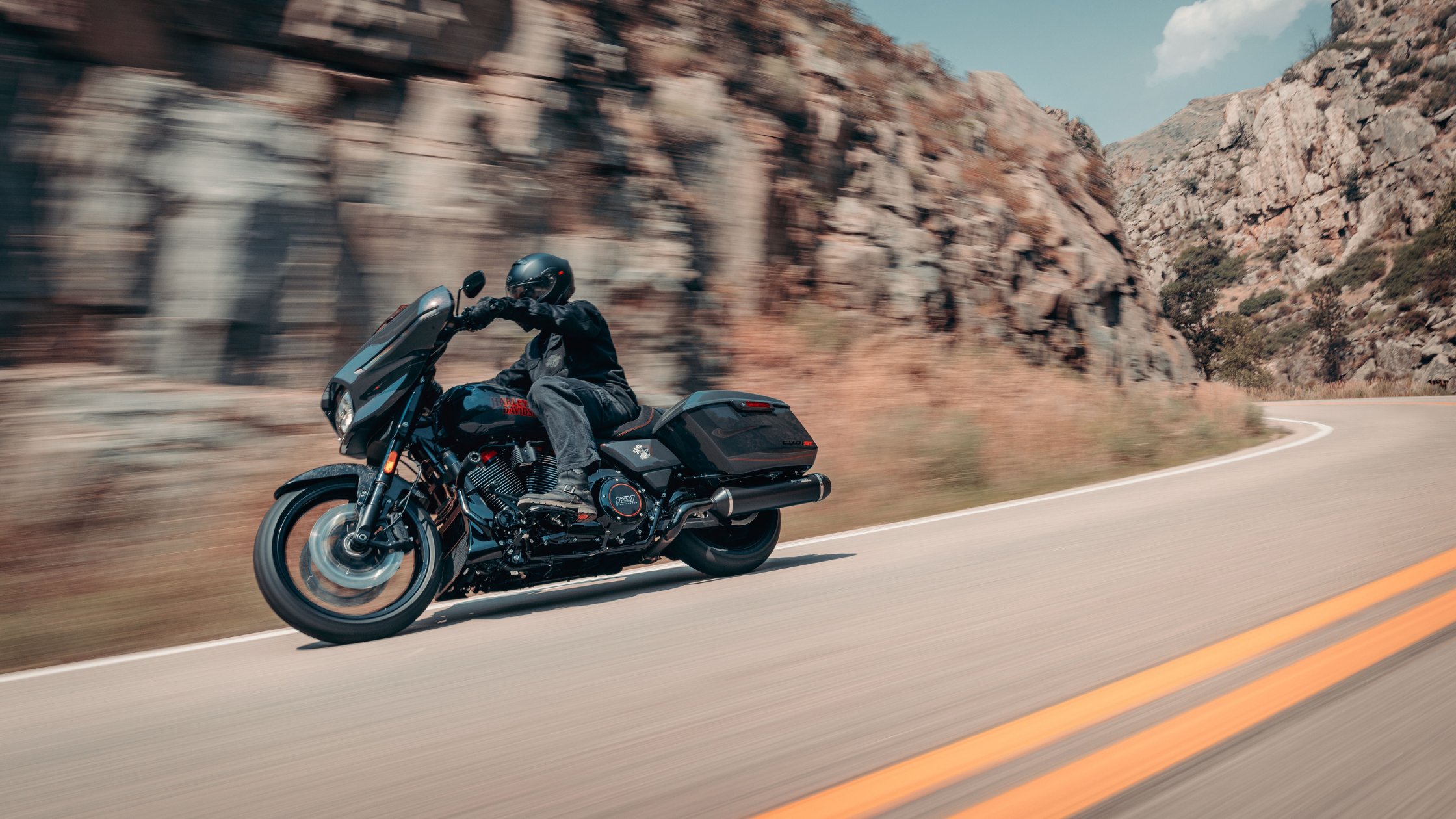
The 2026 Harley-Davidson® CVO™ Street Glide® ST is engineered as a performance-focused touring motorcycle with measurable specifications across power delivery, chassis geometry, and integrated systems. The model combines a high-displacement engine, precision-tuned suspension, and a fully integrated electronic interface to support long-distance operation with controlled handling characteristics. Its configuration emphasizes balance between output, structural rigidity, and rider control systems. The platform includes defined dimensions, calibrated drivetrain ratios, and advanced braking components that support consistent performance under varying conditions. Each specification reflects a deliberate engineering approach centered on efficiency, stability, and mechanical reliability.
Engine Configuration and Output Characteristics
The motorcycle is equipped with the Milwaukee-Eight® 121 High Output engine, featuring a displacement of 121 cubic inches or 1,977 cubic centimeters. The engine uses a bore of 4.075 inches and a stroke of 4.625 inches, producing a compression ratio of 11.4:1. This configuration supports controlled combustion and consistent output across a wide operating range.
The engine generates 127 horsepower at 4,900 revolutions per minute and produces 145 foot-pounds of torque at 4,000 revolutions per minute. The torque output supports low-end acceleration while maintaining sustained power during highway operation. The valve system uses pushrod-operated overhead valves with hydraulic self-adjusting lifters and four valves per cylinder. This arrangement reduces maintenance requirements and ensures consistent valve timing.
Fuel delivery is managed through Electronic Sequential Port Fuel Injection, which provides precise metering of fuel into the combustion chamber. The intake system includes a fiberglass, washable air cleaner designed for efficient airflow and filtration. Exhaust gases are routed through a 2-1-2 dual exhaust system with tapered mufflers, which supports balanced exhaust flow and stable engine performance. The lubrication system is pressurized and uses a dry-sump design to maintain oil circulation under varying load conditions.
Drivetrain Architecture and Gear Ratios
The drivetrain is configured with a chain-driven primary system using a 34 to 46 ratio. The final drive uses a belt system with a 30 to 68 ratio, which reduces maintenance requirements compared to traditional chain drives while maintaining efficient power transfer.
The transmission is a 6-speed Cruise Drive® system designed to balance acceleration and fuel efficiency. The first gear ratio is 10.233, followed by 7.093 in second gear, 5.268 in third gear, 4.266 in fourth gear, 3.635 in fifth gear, and 3.067 in sixth gear. These ratios provide progressive power delivery and reduced engine speed at highway cruising levels.
The clutch system is a mechanically actuated 10-plate wet clutch with Assist and Slip functionality. This design reduces lever effort and limits rear-wheel instability during aggressive downshifting. The system supports smoother transitions between gears and contributes to consistent drivetrain behavior.
Structural Frame and Suspension Engineering
The frame is constructed from mild steel using a tubular structure with cast and forged junctions. The design incorporates a two-piece stamped and welded backbone with twin down-tubes and a bolt-on rear frame. This configuration provides structural rigidity while allowing modular component integration.
The swingarm is also constructed from mild steel and features a two-piece drawn and welded design with forged junctions. This supports durability and consistent rear-wheel alignment.
The front suspension uses 47-millimeter inverted forks with adjustable preload, compression damping, and rebound damping. This allows riders to tune the suspension response based on load and riding conditions. The rear suspension consists of emulsion shocks with adjustable preload, compression damping, and rebound damping, providing balanced performance between comfort and control.
Suspension travel measures 4.6 inches in the front and 3 inches in the rear. These values support stability over uneven surfaces while maintaining controlled handling characteristics. The rake angle is set at 26 degrees, with a fork angle of 29.25 degrees and a trail measurement of 6.7 inches. These geometry values contribute to predictable steering response and directional stability.
Braking System Design and Control Features
The braking system uses dual front rotors with a diameter of 12.6 inches and a thickness of 0.18 inches. These rotors are wave-style and floating, paired with 4-piston fixed radial-mounted calipers. The rear brake includes a single rotor with a diameter of 11.8 inches and a thickness of 0.28 inches, paired with an axial-mounted caliper.
Antilock Braking System functionality is standard and prevents wheel lock during braking. Electronic Linked Braking distributes braking force between the front and rear wheels to maintain stability. These systems operate together to provide consistent deceleration across different riding conditions.
Cornering-specific systems are included to adjust braking performance based on lean angle. Cornering Enhanced Anti-lock Braking and Cornering Electronic Linked Braking modify brake pressure distribution during turns. These systems support controlled braking while the motorcycle is leaned.
Dimensions, Weight, and Capacity Specifications
The overall length of the motorcycle is 94.9 inches, with a width of 38.6 inches and a height of 52.4 inches. The wheelbase measures 64 inches, supporting stability at higher speeds. Seat height is 27.5 inches when laden and 29.1 inches when unladen, providing a low center of gravity for improved control at low speeds.
Ground clearance is measured at 5.3 inches, allowing for sufficient lean angle without compromising stability. The motorcycle achieves a lean angle of 31 degrees on both the left and right sides.
The fuel tank has a capacity of 6 gallons, with a reserve capacity of 1 gallon. Oil capacity with filter is 5 quarts, and the transmission capacity is 1 quart. The primary chain case holds 1.1 quarts, and coolant capacity is 0.82 quarts.
The weight of the motorcycle is 782 pounds as shipped and 816 pounds in running order. The gross vehicle weight rating is 1,360 pounds, with a front axle rating of 500 pounds and a rear axle rating of 927 pounds. Luggage capacity is measured at 2.42 cubic feet, supporting long-distance travel requirements.
Wheels, Tires, and Road Contact
The motorcycle uses black 7-spoke cast aluminum wheels. The front wheel has a diameter of 19 inches and a width of 3.5 inches, while the rear wheel has a diameter of 18 inches and a width of 5 inches. These dimensions support balanced handling and load distribution.
The tires are Dunlop® Harley-Davidson® Series bias blackwall types. The front tire specification is 130/60B19, and the rear tire specification is 180 by 55B18. These tire sizes provide a stable contact patch for both straight-line stability and cornering performance.
Electrical System and Lighting Configuration
The electrical system includes a sealed maintenance-free 12-volt battery rated at 28 amp-hours and 405 cold cranking amps. The charging system is a three-phase 58-amp configuration capable of producing up to 754 watts at 13 volts.
The starting system uses a 1.6 kilowatt electric starter with solenoid engagement. Lighting components include LED headlamps, LED tail and stop lights, and LED front and rear turn signals. These lighting systems provide consistent illumination and reduced power consumption.
A USB-C power outlet rated at 15 watts is located in the media storage compartment, allowing for device charging during operation.
Infotainment and Rider Interface Systems
The infotainment system operates on Skyline™ OS and features a 12.3-inch full-color TFT display. This interface integrates digital gauges and system information into a single display. The system includes two 6.5-inch fairing-mounted speakers with an output of 125 watts per channel.
Audio functionality includes AM and FM radio, as well as support for USB-connected media. Bluetooth® connectivity allows for hands-free mobile phone operation and media playback. Apple CarPlay® compatibility is included for smartphone integration.
The system also includes embedded navigation with traffic and weather updates accessed through a Wi-Fi hotspot connection. The vehicle information display provides data such as air temperature, oil pressure, and engine idle temperature management system status.
Rider Safety and Stability Systems
The motorcycle includes multiple safety systems designed to maintain traction and stability. These include traction control, drag-torque slip control, vehicle hold control, and tire pressure monitoring. These systems monitor wheel speed and engine behavior to adjust output and braking as needed.
Cornering enhancements extend these systems by incorporating lean angle data. Cornering traction control and cornering drag-torque slip control adjust power delivery during turns. These systems support stable handling when the motorcycle is leaned.