
2026 Harley-Davidson® CVO™ Street Glide® 3 Limited near Greenville, SC
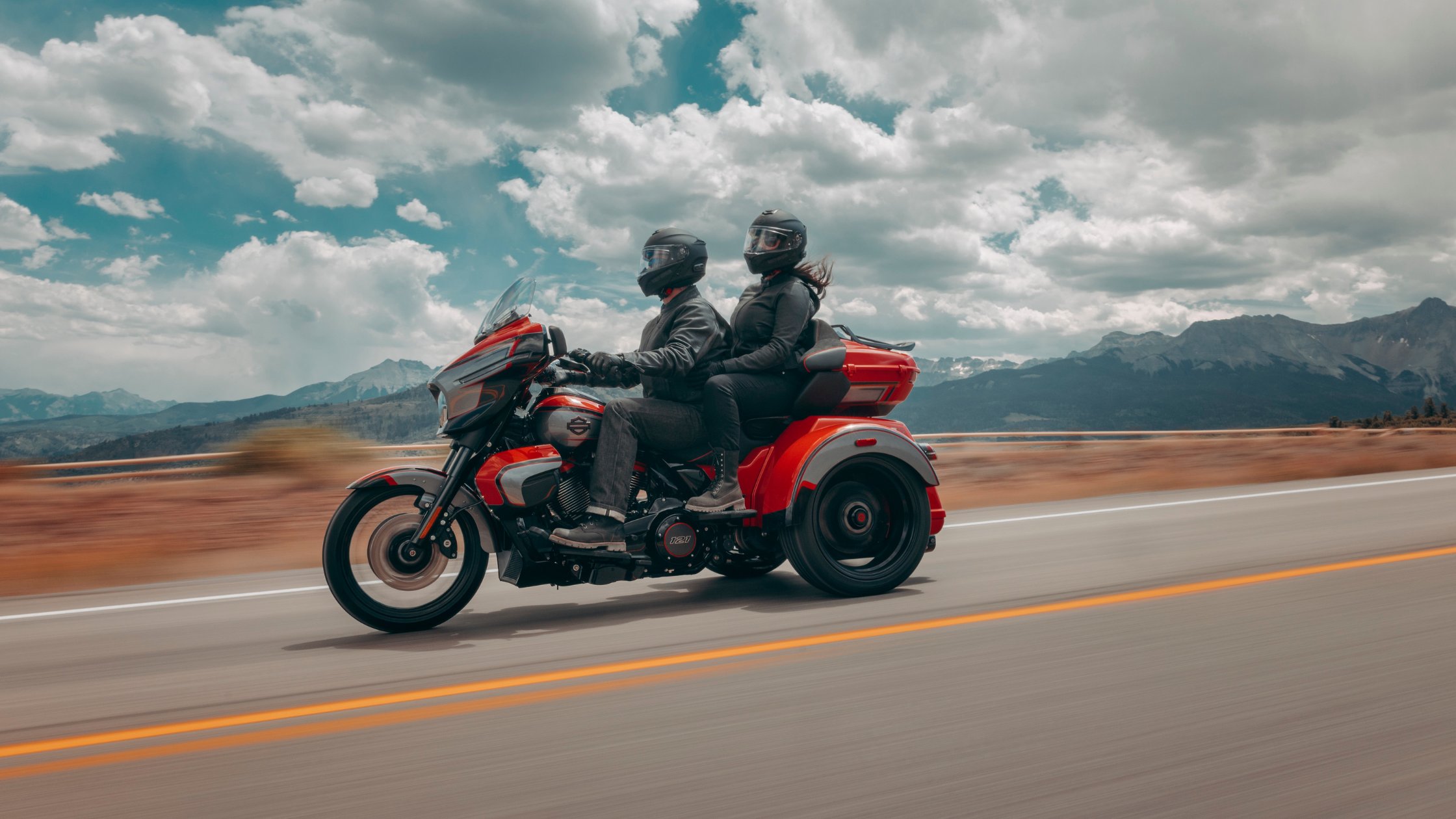
The 2026 Harley-Davidson® CVO™ Street Glide® 3 Limited is engineered as a three-wheel touring motorcycle with a focus on mechanical precision, system integration, and long-distance capability. The model features a Milwaukee-Eight® VVT 121 engine, a reinforced chassis structure, and a comprehensive set of rider-assist technologies. Its configuration reflects a design that prioritizes stability, load capacity, and controlled power delivery.
The overall dimensions include a length of 105.7 inches, a width of 57.3 inches, and a height of 56.5 inches. The wheelbase measures 67.7 inches, contributing to consistent tracking and balance during operation. Laden seat height is set at 27.3 inches, while unladen seat height is 28.9 inches. Static ground clearance measures 5.1 inches. The rake angle is 26 degrees, with a fork angle of 32 degrees and a trail measurement of 3.8 inches. These specifications establish the structural geometry that defines handling behavior and rider positioning.
Engine Configuration and Output Characteristics
The Milwaukee-Eight® VVT 121 engine uses a displacement of 121 cubic inches, equivalent to 1,977 cubic centimeters. The bore measures 4.075 inches, and the stroke is 4.625 inches. The compression ratio is rated at 11.4:1, supporting efficient combustion within the cylinder.
The valve system consists of pushrod-operated overhead valves with hydraulic self-adjusting lifters. Each cylinder contains four valves, allowing improved airflow management. Variable valve timing adjusts intake and exhaust timing based on engine speed and load conditions, improving efficiency across different operating ranges.
The engine produces 114 horsepower at 4,500 rpm and generates 138 foot-pounds of torque at 3,750 rpm. Fuel delivery is managed through Electronic Sequential Port Fuel Injection, which meters fuel precisely to each cylinder. The air intake system includes a synthetic felt, washable air cleaner designed for durability and repeat use.
The exhaust configuration uses a 2-1-2 dual exhaust layout. This arrangement balances exhaust flow and supports consistent engine output. Lubrication is handled by a pressurized dry-sump system, which maintains oil circulation under varying riding conditions and reduces the risk of oil starvation during extended operation.
Drivetrain Architecture and Transmission Design
The drivetrain uses a chain-driven primary system with a 34 to 46 ratio. Final drive is delivered through a belt system with a 30 to 70 ratio. This combination is engineered for efficient torque transfer and reduced maintenance requirements compared to traditional chain-only systems.
The clutch is a mechanically actuated 10-plate wet design with assist and slip functionality. This configuration reduces lever effort and improves stability during deceleration by limiting rear-wheel lockup.
The transmission is a 6-speed Cruise Drive® unit equipped with reverse capability. The inclusion of reverse supports maneuverability during parking and low-speed operations. Gear ratios are calibrated to provide controlled acceleration and stable cruising performance. The first gear ratio is 10.534, followed by 7.302 in second, 5.423 in third, 4.392 in fourth, 3.742 in fifth, and 3.0 in sixth. These ratios support gradual power progression across the speed range.
Chassis Engineering and Suspension Systems
The frame is constructed from mild steel using a square-section backbone with twin downtubes. This structure provides rigidity and load-bearing strength. The swingarm is produced using permanent mold cast aluminum, reducing weight while maintaining structural integrity.
The front suspension uses a 49 millimeter dual-bending valve fork. This system provides 4.6 inches of travel and is designed to manage road irregularities while maintaining steering control. Rear suspension consists of hand-adjustable emulsion shocks with 3.46 inches of travel. Adjustment capability allows changes in preload to accommodate varying rider and cargo weights.
Wheels, Tires, and Brake System Specifications
The motorcycle uses Dunlop® Harley-Davidson® Series tires, with a bias-construction front tire and a radial rear tire. The front tire model is D408F with a specification of 130/60B19. The rear tire model is TK100 with a specification of P215/45R18.
The front wheel has a diameter of 19 inches and a width of 3.5 inches. The rear wheel measures 18 inches in diameter with a width of 7 inches. Both wheels use a dual-grain chrome 14-spoke design.
The braking system includes dual floating front rotors with a diameter of 11.8 inches and a thickness of 0.197 inches. These rotors are paired with 32-millimeter 4-piston fixed calipers. The rear brake uses a fixed rotor with the same diameter of 11.8 inches and a thickness of 0.276 inches. The rear caliper is a floating 36-millimeter piston unit with an integrated park brake.
An Anti-lock Braking System is standard. This system regulates brake pressure to prevent wheel lock during sudden or forceful braking inputs.
Electrical System and Integrated Controls
The electrical system includes a sealed maintenance-free 12-volt battery rated at 28 amp-hours with 405 cold cranking amps. Charging is managed by a three-phase 48-amp system capable of producing up to 625 watts at 13 volts.
The starting system uses a 1.6 kilowatt electric starter with solenoid engagement. Lighting components are fully LED-based, including the headlamp, tail and stop lights, and turn signals. Additional LED fog lamps are integrated into the lower fairings to improve forward visibility.
A USB-C power outlet rated at 15 watts is located in the media storage compartment. This port supports charging of external devices. The motorcycle also includes an electric reverse system that is controlled through handlebar-mounted inputs, improving maneuverability during low-speed operation.
Infotainment System and Connectivity Features
The infotainment system operates on Skyline™ OS and uses a 12.3-inch full-color TFT display. This interface integrates vehicle information, navigation, and media controls into a single system.
The audio system includes six speakers. These are positioned in the fairing, Tour-Pak®, and lower fairings. Amplification provides 125 watts across four channels and 150 watts across two channels. This configuration supports consistent audio output across the system.
Connectivity features include Apple CarPlay® compatibility in both wired and wireless formats. Bluetooth® connectivity supports phone pairing, media playback, and headset communication. The system also supports USB-C and MTP smartphone connections within the inner fairing storage area.
An embedded navigation system is included, providing route guidance along with traffic and weather data through a Wi-Fi hotspot connection. The system also supports hands-free mobile communication and rider-passenger intercom functionality.
Rider Safety and Stability Systems
The motorcycle integrates multiple electronic rider-assist systems designed to support stability and braking control. These systems include the Anti-lock Braking System, Electronic Linked Braking, and Traction Control System. Each system monitors wheel speed and adjusts braking or torque delivery as required.
The drag-torque Slip Control System reduces the effect of engine braking on the rear wheel during deceleration. Vehicle Hold Control maintains brake pressure when the motorcycle is stationary on an incline, preventing unintended movement. Tire Pressure Monitoring System provides continuous updates on tire pressure levels.
Cornering-specific systems include Cornering Enhanced Anti-lock Braking System, Cornering Enhanced Electronic Linked Braking, Cornering Enhanced Traction Control, and Cornering Drag-torque Slip Control System. These systems adjust performance parameters based on lean angle, supporting stability during directional changes.
Fuel Capacity, Efficiency, and Operational Range
The fuel tank has a capacity of 6 gallons, with a reserve capacity of 1 gallon indicated by a warning light. Oil capacity is 5 quarts with a filter installed. The transmission holds 1.22 quarts of fluid, and the primary chain case holds 1.1 quarts. Coolant capacity is 0.82 quarts.
The estimated fuel economy is 39 miles per gallon under combined city and highway conditions. This level of efficiency supports extended travel distances between refueling stops.
The motorcycle has a running weight of 1,283 pounds and a gross vehicle weight rating of 1,700 pounds. The front axle weight rating is 511 pounds, while the rear axle is rated at 1,189 pounds. Luggage capacity is measured at 7.1 cubic feet, allowing storage of touring equipment and personal items.