
2025 Harley-Davidson® Freewheeler® near Greenville, SC
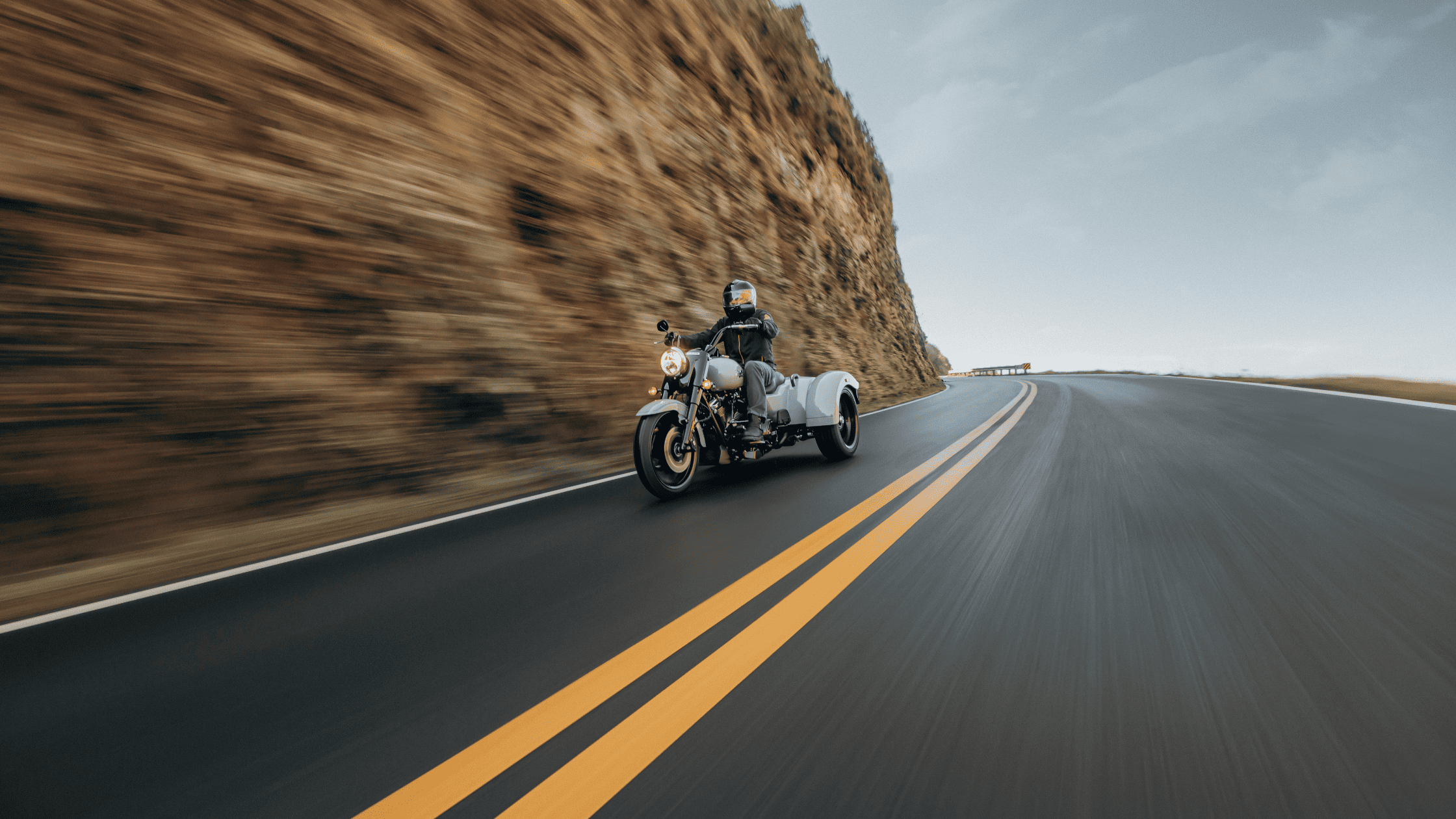
The 2025 Harley-Davidson® Freewheeler® is a factory-engineered trike designed to merge traditional cruiser styling with the mechanical advantages of a three-wheel platform. This model is configured to provide added stability, predictable handling, and load-carrying capability while maintaining the proportions and stance associated with stripped-down Harley-Davidson® cruisers. The 2025 Harley-Davidson® Freewheeler® uses a rigid trike chassis paired with a wide rear track, allowing torque to be distributed across two rear wheels instead of one. This layout supports consistent traction during acceleration and braking while reducing the need for rider balance input at low speeds. The overall design emphasizes mechanical simplicity, durability, and control, aligning with riders who prioritize structural confidence and straightforward functionality over complexity.
The 2025 Harley-Davidson® Freewheeler® is offered in a single trim with multiple factory color options, including Billiard Gray, Vivid Black, and Whiskey Fire. The visual profile is reinforced by blacked-out finishes applied across the front wheel, forks, powertrain, dashboard, and exhaust system. These finishes are not purely cosmetic, as they also help reduce visual glare and unify the mechanical components into a cohesive structure. The result is a trike that presents a minimalistic appearance while retaining the necessary components for long-distance riding and passenger accommodation.
Milwaukee-Eight® 114 Powertrain Output and Mechanical Characteristics
The 2025 Harley-Davidson® Freewheeler® is powered by the Milwaukee-Eight® 114 V-twin engine, a displacement-focused powerplant engineered to deliver strong low-end and mid-range torque. This engine produces 90 horsepower and 119 foot-pounds of torque, allowing the trike to maintain steady highway speeds and execute controlled passing maneuvers with limited throttle input. The torque curve is tuned to favor smooth power delivery rather than high-rev output, which supports rider confidence during sustained cruising and stop-and-go operation.
Fuel delivery and combustion efficiency contribute to an estimated fuel economy of 43 miles per gallon. This figure reflects the balance between engine displacement, vehicle mass, and aerodynamic profile. The engine is paired with a drivetrain that sends power directly to both rear wheels, improving traction during acceleration and reducing wheel slip on surfaces with reduced grip. This configuration also minimizes drivetrain stress during heavy throttle application by distributing load across a wider contact area.
The Milwaukee-Eight® engine architecture includes four valves per cylinder and a single camshaft design, supporting efficient airflow and consistent combustion. These mechanical attributes help reduce vibration and improve thermal management during extended riding periods. The engine is engineered to operate within stable temperature ranges during highway travel and urban use, supporting durability and predictable performance across varied conditions.
Chassis Geometry and Trike-Specific Suspension Systems
The 2025 Harley-Davidson® Freewheeler® uses a dedicated trike chassis designed to manage the forces generated by a wide rear axle and dual rear wheels. This chassis provides a fixed geometry that eliminates lean input while cornering, relying instead on lateral stability and suspension compliance to maintain control. The front suspension employs dual bending valve technology, which allows damping rates to adjust based on road conditions and suspension travel speed. This design supports a controlled ride over uneven pavement while maintaining firmness during aggressive braking or directional changes.
Rear suspension performance is managed through a preload-adjustable system equipped with a single adjustment knob. This mechanism allows the rider to compensate for added passenger weight or cargo stored in the rear trunk. Adjusting preload changes the ride height and suspension response, ensuring consistent handling characteristics regardless of load conditions. The rear suspension uses emulsion shock technology, which supports stable damping performance during extended operation and reduces heat buildup.
The combined suspension setup is engineered to maintain chassis composure during acceleration, braking, and sustained cruising. The suspension geometry works in conjunction with the wide rear track to limit body roll and provide predictable directional response. This design reduces rider fatigue by minimizing corrective steering input over long distances.
Braking Architecture and Integrated Control Systems
Braking performance on the 2025 Harley-Davidson® Freewheeler® is managed through a multi-system architecture designed to support stability and control under varying conditions. The trike is equipped with dual floating front brake rotors and a fixed rear rotor. This configuration provides consistent braking force distribution across all contact points. The Anti-lock Brake System is designed to prevent wheel lock during straight-line braking by modulating brake pressure when slip is detected.
Electronic Linked Braking enhances braking performance by applying brake force to both front and rear wheels when the rider engages the front brake lever. This system improves deceleration efficiency while maintaining stability. During lighter braking or lower-speed operation, the system reduces or disengages linking to preserve smooth response.
The 2025 Harley-Davidson® Freewheeler® also includes Drag-Torque Slip Control System technology, which reduces rear-wheel slip during abrupt downshifts or sudden throttle reduction. This system supports drivetrain stability when engine braking forces exceed available traction, particularly on wet or low-friction surfaces.
Cornering Enhanced Rider Safety Technologies
Cornering-enhanced safety systems are integrated to manage traction and braking forces during lateral acceleration. Cornering Enhanced Anti-lock Brake System adjusts braking pressure based on the trike’s lateral forces rather than lean angle. This ensures appropriate brake modulation while cornering, helping the vehicle maintain its intended path.
Cornering Enhanced Electronic Linked Braking modifies front-to-rear brake distribution during cornering scenarios. This adjustment reduces the likelihood of instability caused by uneven brake force application. The Cornering Enhanced Traction Control System monitors rear-wheel behavior during both straight-line and cornering acceleration. When excessive wheel spin is detected, engine torque is adjusted to restore traction.
These systems operate continuously and automatically without requiring rider intervention. Their integration supports consistent handling and braking performance across a wide range of riding environments.
Rider Interface and Operational Convenience Features
Operational convenience is addressed through integrated systems designed to simplify trike operation. Electric reverse is included to assist with low-speed maneuvering. This system allows the rider to reverse the trike using an electric motor rather than physical pushing. This feature is particularly beneficial when parking on inclines or in confined spaces, reducing physical strain and improving control.
The handlebar configuration uses mini-ape handlebars that position the rider upright with a neutral reach to the controls. This posture supports long-duration riding by reducing wrist and shoulder fatigue. The handlebars offer adjustability for height and reach, allowing riders to tailor ergonomics to their body dimensions. Control placement is engineered for intuitive operation, enabling the rider to access braking, throttle, and safety systems without unnecessary movement.
Storage Capacity and Passenger Accommodation Design
The 2025 Harley-Davidson® Freewheeler® includes a rear-mounted trunk that provides 2 cubic feet of storage volume. The trunk is weatherproof and features a locking lid to secure contents during travel. Its side-opening design allows for easier loading and unloading compared to top-opening configurations. The storage compartment is sized to accommodate two full-face helmets placed side by side, with additional space for riding gear or travel items.
Passenger accommodation is supported through a two-up seat designed to distribute weight evenly across the chassis. Integrated soft-touch passenger grab handles provide additional stability for the passenger during acceleration and braking. These features allow the 2025 Harley-Davidson® Freewheeler® to function as a two-person touring platform without requiring structural modifications or aftermarket components.
Exhaust Configuration and External Component Integration
Exhaust routing on the 2025 Harley-Davidson® Freewheeler® uses dual slash-down mufflers positioned between the rear wheels. This placement supports balanced weight distribution while maintaining ground clearance. The muffler design contributes to controlled exhaust flow and consistent back pressure, supporting engine performance and thermal management. The blacked-out finish applied to the exhaust components aligns with the overall visual treatment of the trike and helps minimize surface discoloration over time.
The rear fenders use a bobtail design that complements the wide rear stance while providing coverage for the rear wheels. This configuration supports debris control and protects the rear suspension and drivetrain components during operation.